
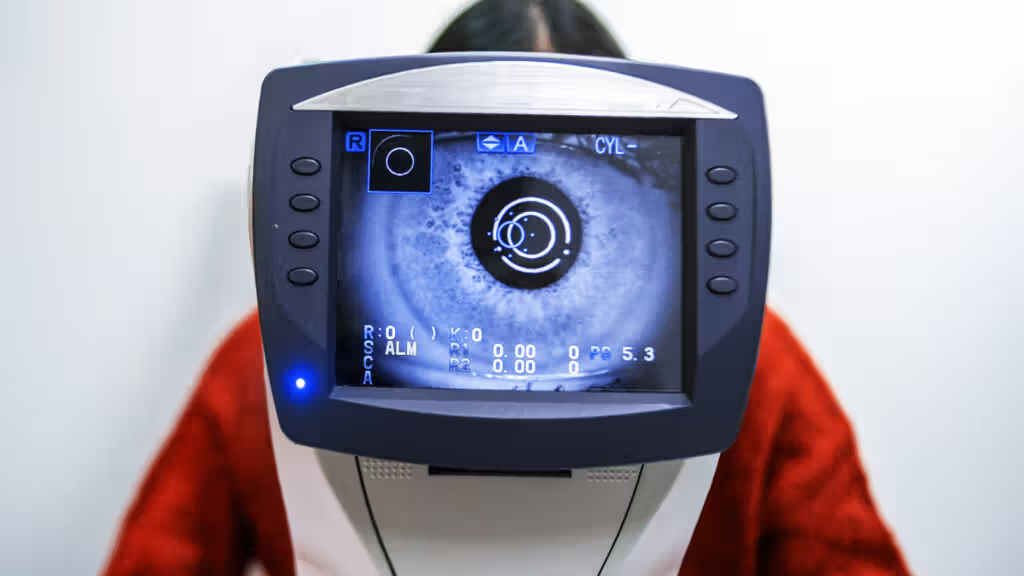
January is Glaucoma Awareness Month, a time dedicated to raising awareness about one of the leading causes of irreversible vision loss. At Blumenstock Eyecare in Lincoln, Nebraska, we encourage patients to use this month as a reminder to focus on eye health, understand glaucoma risk factors, and schedule routine glaucoma screenings.
What Is Glaucoma?
Glaucoma is a group of eye diseases that damage the optic nerve. In many cases, this damage is caused by increased pressure inside the eye. The optic nerve plays a key role in sending visual information from the eye to the brain. When it becomes damaged, permanent vision loss can occur.
Often called the “silent thief of sight,” glaucoma usually develops without noticeable symptoms in its early stages. Because of this, many people do not realize they have glaucoma until vision loss has already occurred.¹ While glaucoma cannot be cured, early detection and treatment can help slow or prevent further damage.¹
Why Glaucoma Awareness Month Matters
Glaucoma is one of the leading causes of blindness worldwide.² In fact, more than three million people in the United States are living with glaucoma. However, nearly half of them are unaware they have the condition.³ As a result, routine eye exams play a critical role in protecting long-term vision.
During Glaucoma Awareness Month, eye care professionals focus on education and prevention. This helps patients in Lincoln, NE and surrounding areas understand why early detection and ongoing care are so important.
Glaucoma Risk Factors to Know
Although glaucoma can affect anyone, certain factors increase the risk. For example, adults over age 60 are more likely to develop the condition. A family history of glaucoma also raises concern.
Additionally, individuals who are African American or Hispanic face higher risk. Medical conditions such as diabetes or high blood pressure can contribute as well. Eye injuries, long-term steroid use, and elevated eye pressure are also known risk factors.⁴
Because symptoms may not appear early on, regular eye exams remain essential, even for patients who feel their vision is normal.
Tips to Protect Your Vision During Glaucoma Awareness Month
One of the best ways to protect your vision is by scheduling a comprehensive eye exam with an eye doctor in Lincoln, NE. During a glaucoma screening, your optometrist checks eye pressure and examines the optic nerve. This allows potential issues to be detected before vision loss occurs.¹
In addition, knowing your family eye health history can make a difference. If glaucoma runs in your family, your eye doctor may recommend more frequent screenings.
Healthy habits also support long-term eye health. For instance, regular physical activity can improve circulation. Managing chronic conditions like diabetes is equally important. Eating leafy greens and nutrient-rich foods may also help support optic nerve health.⁵
Finally, sharing information about glaucoma can help others take action. Encouraging friends or family members to schedule an eye exam may protect their vision, too.
When Should You Schedule a Glaucoma Screening?
According to the American Academy of Ophthalmology, adults should receive a baseline comprehensive eye exam by age 40.⁶ After that, exam frequency depends on individual risk factors.
Patients at higher risk may benefit from annual glaucoma screenings. These exams help monitor eye pressure and optic nerve health over time.
Schedule Your Glaucoma Screening in Lincoln, NE
Glaucoma Awareness Month is an excellent time to take a proactive approach to eye health. Early detection remains the most effective way to reduce the risk of vision loss.
Schedule your glaucoma screening at Blumenstock Eyecare in Lincoln, Nebraska today. Visit https://blumenstockeyecare.com/ or contact our office to book an appointment.
Protect your vision by making eye health a priority this January and throughout the year.
Citations
- National Eye Institute. Glaucoma.
https://www.nei.nih.gov/learn-about-eye-health/eye-conditions-and-diseases/glaucoma - World Health Organization. Blindness and Vision Impairment.
https://www.who.int/news-room/fact-sheets/detail/blindness-and-vision-impairment - Centers for Disease Control and Prevention. Glaucoma Awareness.
https://www.cdc.gov/visionhealth/resources/features/glaucoma-awareness.html - American Academy of Ophthalmology. What Is Glaucoma?
https://www.aao.org/eye-health/diseases/what-is-glaucoma - Harvard Health Publishing. Protect Your Eyesight.
https://www.health.harvard.edu/eye-health - American Academy of Ophthalmology. Eye Exams 101.
https://www.aao.org/eye-health/tips-prevention/eye-exams-101